123-456-7890

hellocallcenter@gmail.com

123 Anywhere St., Any City, 12345
Carotid Artery Disease is a condition in which the carotid arteries, the major blood vessels that supply blood to the brain, become narrowed or blocked due to a buildup of plaque (atherosclerosis). This narrowing reduces blood flow to the brain and increases the risk of stroke, one of the leading causes of death and long-term disability worldwide. Early diagnosis, lifestyle modifications, and timely intervention are essential to prevent stroke and preserve neurological function.
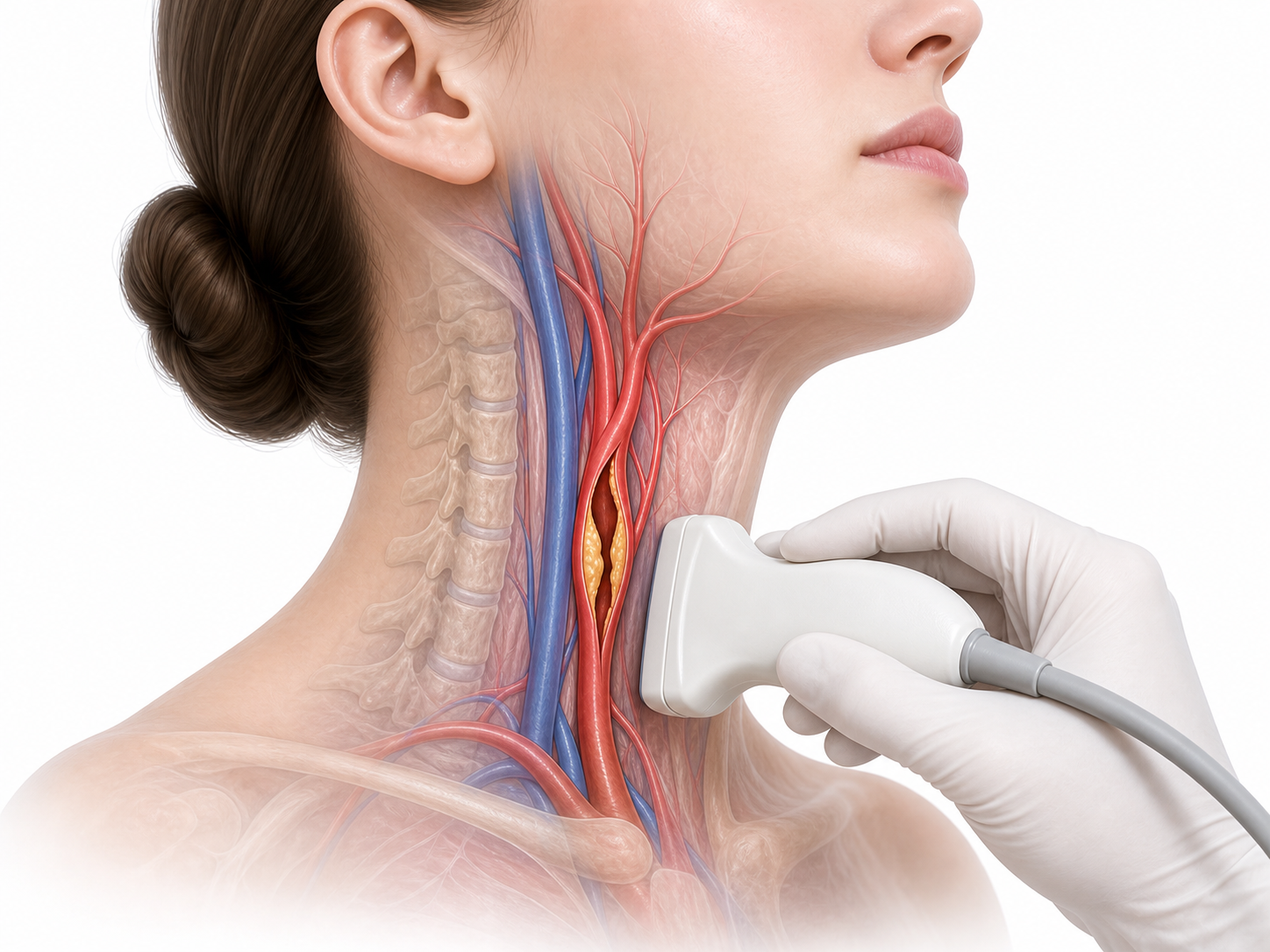
Carotid Artery Disease develops when fatty deposits called plaque accumulate inside the carotid arteries, which run along both sides of the neck and supply oxygen-rich blood to the brain. Over time, this plaque hardens and narrows the arteries, reducing blood flow. More dangerously, pieces of plaque can break off and travel to the brain, blocking smaller arteries and causing a stroke or transient ischemic attack (TIA), often called a "mini-stroke."
At Nandan Vascular Center, we offer comprehensive carotid artery evaluation and advanced treatments including carotid endarterectomy (CEA) and carotid artery stenting (CAS). Our goal is to prevent stroke, restore adequate blood flow to the brain, and improve long-term neurological health through personalized, evidence-based care.
Carotid artery disease often has no symptoms until a stroke or TIA occurs. Recognizing the warning signs of a transient ischemic attack (TIA) is critical for prevention.
Carotid artery disease is primarily caused by atherosclerosis, but several risk factors significantly increase the likelihood of developing the condition. Managing these risk factors is crucial for prevention and treatment.
At Nandan Vascular Center, we use state-of-the-art diagnostic tools to accurately assess carotid artery disease severity and plan appropriate treatment: Carotid Duplex Ultrasound – a non-invasive test that combines Doppler ultrasound to evaluate blood flow and visualize plaque in the carotid arteries, CT Angiography (CTA) – detailed imaging to map the carotid anatomy and measure stenosis, MR Angiography (MRA) – non-invasive imaging to assess the carotid arteries without radiation, Digital Subtraction Angiography (DSA) – the gold standard for precise visualization of carotid artery blockages before intervention.
Carotid artery disease treatment focuses on reducing stroke risk, relieving symptoms, and preventing disease progression. We offer a full spectrum of treatments tailored to each patient's condition.
Smoking cessation, dietary changes, regular exercise, and medications to control blood pressure, cholesterol, and diabetes form the foundation of carotid artery disease management and stroke prevention.
The gold standard surgical procedure for severe carotid stenosis. The surgeon removes the plaque buildup from inside the carotid artery, restoring normal blood flow to the brain and significantly reducing stroke risk.
A minimally invasive alternative to surgery where a stent is inserted through a catheter and expanded inside the carotid artery to keep it open and restore blood flow, particularly suitable for high-risk surgical patients.
Medications such as aspirin or clopidogrel to reduce the risk of blood clots forming on the plaque surface and causing a stroke.
Advanced monitoring of cerebral blood flow during procedures to ensure adequate brain perfusion and detect microemboli that could cause stroke.
A Transient Ischemic Attack (TIA) is often a warning sign of an impending stroke. Recognizing and responding to TIA symptoms is crucial for stroke prevention.
Untreated carotid artery disease can lead to devastating complications that affect long-term health and quality of life.
We provide comprehensive, multidisciplinary carotid artery disease care with a focus on stroke prevention, advanced interventions, and long-term neurological health.
Our specialists perform detailed clinical examinations supported by Carotid Doppler Ultrasound, CT Angiography, and advanced vascular imaging to accurately identify arterial narrowing. Early diagnosis helps reduce stroke risk and enables timely intervention for better long-term outcomes.
We provide comprehensive treatment including medication management, carotid endarterectomy, and minimally invasive carotid artery stenting based on each patient's condition. Our goal is to restore healthy blood flow while minimizing the risk of stroke and neurological complications.
Every patient receives a customized treatment plan based on age, medical history, vascular health, and disease severity. Our specialists focus on preventing future strokes through advanced vascular care, lifestyle modifications, and continuous medical monitoring.
We provide ongoing follow-up evaluations, vascular imaging, medication reviews, and risk factor management to maintain healthy blood flow and prevent recurrence. Our long-term care programs help patients reduce cardiovascular risks while improving overall vascular wellness.
Complete the form below and our team will contact you to confirm your appointment.

32/2/9, Ratnamamba Street,
Padmaja Clinic,
Mogalrajapuram,
Christurajupuram,
Vijayawada - 520010
Monday - Saturday
9:00 AM - 7:00 PM