123-456-7890

hellocallcenter@gmail.com

123 Anywhere St., Any City, 12345
An Arteriovenous (AV) Fistula is a surgically created connection between an artery and a vein, usually in the arm, that provides reliable vascular access for hemodialysis in patients with end-stage renal disease (ESRD). AV fistula surgery creates a durable access point with high blood flow rates necessary for effective dialysis treatment. Early surgical planning and expert creation are essential to ensure long-term function, minimize complications, and improve quality of life for dialysis patients.
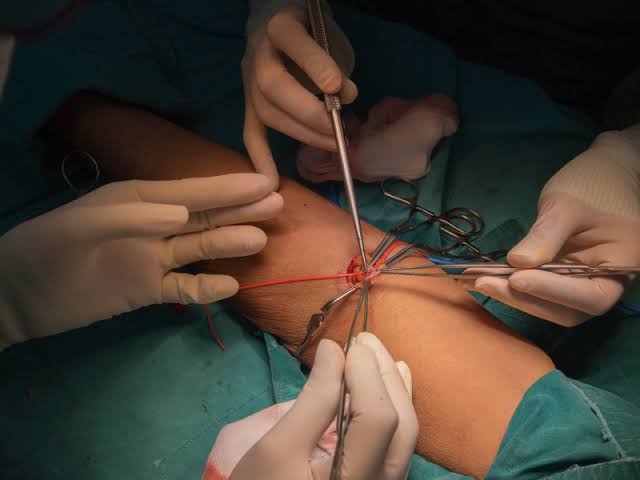
AV Fistula surgery is a specialized vascular procedure that creates a direct connection between an artery and a vein, typically in the non-dominant arm. This connection causes increased blood flow into the vein, allowing it to enlarge and strengthen over time. The matured fistula provides a durable, high-flow access point that can be repeatedly punctured for hemodialysis treatments with minimal complications.
At Nandan Vascular Center, we specialize in AV fistula creation, maintenance, and revision surgeries. Our experienced vascular surgeons use advanced microsurgical techniques to create fistulas with optimal blood flow, long-term patency, and minimal complications. We work closely with nephrologists and dialysis centers to ensure seamless coordination of care and the best possible outcomes for our patients.
AV fistula surgery is recommended for patients with advanced kidney disease who require long-term hemodialysis. Early surgical planning is essential to allow adequate time for the fistula to mature before dialysis begins.
Understanding the different types of vascular access helps patients make informed decisions about their dialysis care.
The most common type, created by connecting the radial artery to the cephalic vein at the wrist. This fistula offers excellent long-term patency and minimal complications when performed in suitable patients.
Created by connecting the brachial artery to the cephalic vein in the upper arm. This fistula provides higher blood flow rates and is preferred when wrist vessels are inadequate.
Created by connecting the brachial artery to the basilic vein, which is then transposed to a more superficial position. This is an excellent option when other veins are unsuitable.
A synthetic tube connecting an artery to a vein when native veins are inadequate for fistula creation. While easier to create, grafts have higher complication rates and shorter longevity compared to fistulas.
Before AV fistula surgery, our vascular specialists perform a thorough evaluation to identify the optimal site and technique for each patient: Vascular Mapping – Duplex ultrasound to assess vein and artery size, depth, and quality, Physical Examination – evaluation of upper extremity anatomy, pulse, and collateral circulation, Medical History Review – assessment of risk factors including diabetes, hypertension, and prior vascular procedures, Coordination with Nephrology Team – planning the optimal timing of surgery relative to dialysis initiation.
Proper post-operative care and fistula maturation are essential for long-term functionality. We provide comprehensive follow-up to ensure optimal outcomes.
While AV fistulas are the preferred access method, complications can occur. Our team is experienced in managing all potential complications to preserve fistula function.
Some fistulas fail to develop adequate size or blood flow. Our team uses balloon angioplasty (PTA) or surgical revision to promote maturation and salvage the fistula.
Narrowing of the vein near the anastomosis or in the outflow vein reduces blood flow. Treatment includes angioplasty with or without stenting to restore adequate flow.
Acute or chronic clot formation can block the fistula. Our team provides thrombectomy and thrombolysis procedures to restore patency and salvage the access.
Dilatation or rupture of the vein wall can occur with repeated punctures. Surgical repair or revision is performed to maintain safe, functional access.
Fistula infections require prompt antibiotic therapy and, if severe, surgical debridement or fistula ligation to prevent systemic spread.
The AV fistula is considered the gold standard for dialysis access due to its superior outcomes compared to other access methods.
We provide comprehensive AV fistula care with a focus on surgical excellence, patient comfort, and long-term dialysis success.
Our specialists perform comprehensive vascular mapping using Duplex Doppler Ultrasound to evaluate artery and vein quality before surgery. Careful assessment helps identify the most suitable vessels, ensuring successful fistula creation and long-term dialysis access with minimal complications.
We perform advanced AV fistula creation, revision, and reconstruction procedures using modern vascular surgical techniques. Our goal is to establish durable vascular access that delivers efficient dialysis while reducing the risk of infection, clotting, and access failure.
Regular evaluation of blood flow, fistula function, and vascular health allows early detection of narrowing or blockages. We provide timely interventions to maintain optimal dialysis performance and extend the lifespan of your vascular access.
Our comprehensive follow-up care includes fistula monitoring, patient education, lifestyle guidance, and preventive vascular care to ensure reliable dialysis access. We work closely with nephrologists to provide coordinated treatment that supports long-term kidney care and overall well-being.
Complete the form below and our team will contact you to confirm your appointment.

32/2/9, Ratnamamba Street,
Padmaja Clinic,
Mogalrajapuram,
Christurajupuram,
Vijayawada - 520010
Monday - Saturday
9:00 AM - 7:00 PM